Circular Hollow Section – Plastic Section Modulus Calculator
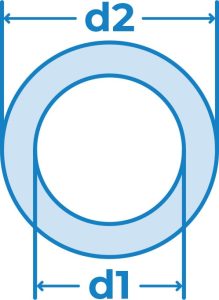
The Circular Hollow Section (CHS) Plastic Section Modulus Calculator calculates the plastic section modulus (Zā) of a circular hollow section. Plastic section modulus is used in structural engineering to determine the full plastic bending capacity of a section once the material has yielded across the entire cross-section.
Section Diagram
What is Plastic Section Modulus?
Plastic Section Modulus is a geometric property used to calculate the maximum bending moment a section can resist after it has fully yielded. Unlike elastic section modulus, which assumes the material remains within its elastic limit, plastic section modulus considers the section after the yield stress has been reached throughout the entire cross-section.
For circular hollow sections, plastic section modulus is commonly used in steel design to determine the plastic moment capacity of beams, columns and structural members. Engineers use this value alongside material properties such as yield strength to verify compliance with relevant design standards.
Because circular hollow sections distribute material efficiently around their circumference, they provide excellent strength-to-weight performance and are widely used in structural frames, bridges, architectural steelwork and industrial buildings.
Why calculate the Plastic Section Modulus of a Circular Hollow Section?
Knowing the plastic section modulus of a CHS allows structural engineers to accurately determine the member’s ultimate bending resistance.
It is commonly used when:
- Calculating plastic moment capacity
- Designing steel beams and columns
- Assessing structural members to Eurocode 3 and other design standards
- Comparing different hollow section sizes
- Checking existing structures during refurbishment or alteration projects
Using an accurate plastic section modulus helps engineers optimise steel sizes while maintaining safety, efficiency and compliance.