For the purposes of this study, we have considered only a single-span, simply supported member. In reality, many beams form part of a wider structural system, such as a frame or multi-member arrangement, where additional considerations would apply. In particular, connection design becomes significantly more complex for glulam solutions, often requiring larger connection zones, concealed steelwork or specialist detailing to transfer forces effectively. These aspects can influence both cost and buildability.
Both beams were analysed using identical restraint conditions, spanning 5 m and subjected to a uniformly distributed load of 10 kN/m. A maximum allowable deflection of 10 mm was adopted in line with typical serviceability expectations, and standard UK-sourced material grades were used for each option. The results are shown below.
|
 |
 |
|
Glulam (GL24h)
|
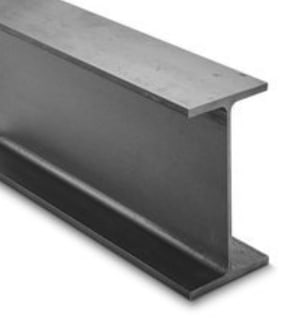
Steel (S355)
|
| Section Size |
400mm deep x 160mm wide |
260mm deep x 102mm wide (254x102x28 UB) |
| Weight |
154kg |
140kg |
| Embodied Carbon |
83 kg CO₂ |
249 kg CO₂ |
| Cost |
£560 |
£270 |
The glulam beam requires significantly greater depth (400 mm) than the steel alternative (260 mm), with the governing factor being stiffness rather than strength. Timber has a much lower modulus of elasticity than steel, meaning the member must be deeper in order to achieve the same deflection performance over a 5 m span. In practical terms, this increased structural depth can have a direct impact on floor zones, ceiling heights and coordination with building services.
Although timber is substantially lighter than steel on a volume-for-volume basis, the larger section size required for glulam offsets much of that advantage in this example. As a result, the overall beam weights are broadly comparable, despite the very different material densities.

The embodied carbon difference, however, is considerable. The steel option carries approximately three times the embodied carbon of the glulam alternative. For projects targeting reduced environmental impact, net-zero aspirations or sustainability certifications, this can become a defining factor in material selection. Glulam also offers the additional architectural benefit of being suitable as an exposed structural finish, which can reduce the need for secondary finishes while contributing warmth and natural character to internal spaces.
In pure material cost terms, steel remains significantly more economical, at around half the cost of the glulam solution in this comparison. While imported glulam can sometimes be sourced at more competitive rates, this often comes with a corresponding increase in transportation impacts and embodied carbon, partially offsetting one of timber’s key environmental advantages.

Conclusion
There is no universal “better” solution, only the right response to the specific project constraints and design priorities.
If minimising structural depth and upfront material cost are the key drivers, steel remains an extremely efficient and economical solution. However, if reducing embodied carbon, achieving a warmer architectural aesthetic or expressing the structure is a priority, glulam becomes a highly compelling alternative.
Ultimately, the optimum solution lies in carefully balancing structural performance, cost, carbon, buildability and architectural intent, while understanding the trade-offs early in the design process so informed decisions can be made collaboratively across the design team.